In power systems, which are considered the heart of electrical panels and industrial facilities, selecting the right material for current transmission is critical for both operational safety and cost efficiency. In this field, braided flexible busbars, a favorite of modern engineering, and traditional solid copper busbars stand out as the two fundamental solutions determining project performance.
So, which conductor should you choose for your project? Here is a comparative analysis of both materials.
What is a Braided Flexible Busbar and What Are Its Advantages?
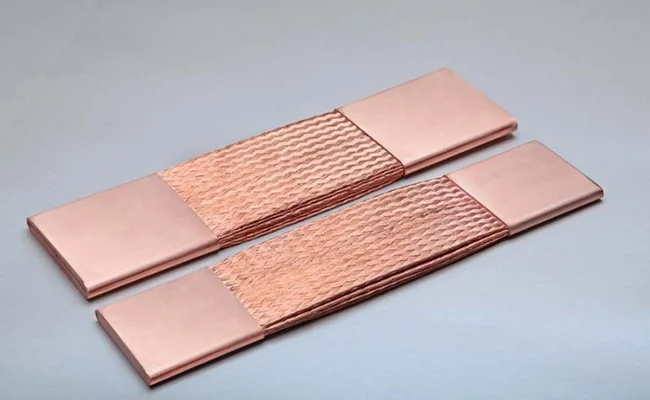
Braided flexible busbars are manufactured by braiding numerous thin copper wires into a specific pattern to form a strip or tube. This unique braided structure provides the material with exceptional mechanical mobility.
- Excellent Vibration Damping: It effectively absorbs vibrations, especially in connections for high-vibration equipment such as transformers, generators, compressors, and large motors.
- Reduced Risk of Failure: It prevents loosening caused by continuous vibration over time, thereby eliminating dangerous arc faults.
- Fast and Easy Installation: It can be shaped by hand or with simple tools in tight panel spaces, corners, and challenging layouts without requiring hydraulic bending machines. This radically reduces labor time and assembly costs.
When Should Traditional Solid Copper Busbars Be Preferred?
Traditional copper busbars offer a classic solution providing high current carrying capacity and structural stability with their single-piece, solid structure.
- High Mechanical Strength: It demonstrates superior resistance in main distribution lines and main busbar backbones of panels where short-circuit currents are exceptionally high.
- Cost Advantage: The initial material purchasing cost is more economical compared to braided busbars, providing a significant financial advantage in large-scale and budget-driven projects.
- Long and Straight Lines: It is highly efficient for long-distance power lines where the need for shaping is minimal. However, due to its rigid structure, processes like cutting, drilling, and bending require intensive labor.
Conclusion: Which One is the Right Choice for Your Project?
There is no single correct answer in electrical panel design; your choice is determined by the physical and technical conditions of your project.
If movement, vibration resistance, flexibility in tight spaces, and fast installation are your priorities, you should opt for braided flexible busbars. However, if high mechanical strength, fixed lines, and a lower material budget are your targets, solid copper busbars will be the right signature for your project.
Frequently Asked Questions (FAQ)
- Do braided flexible busbars overheat? When the correct cross-section calculation is made, braided flexible busbars can sometimes dissipate heat faster than solid copper busbars due to their larger surface area and the air circulation between the braids. The key is selecting the cross-section appropriate for the current density.
- Are flexible busbars weaker than solid copper busbars in terms of current carrying capacity? No. A braided busbar and a solid copper busbar with the same cross-sectional area (mm²) carry similar currents. However, the flexibility margin of braided busbars prevents damage to connection points during sudden high-current shocks (short circuits).