
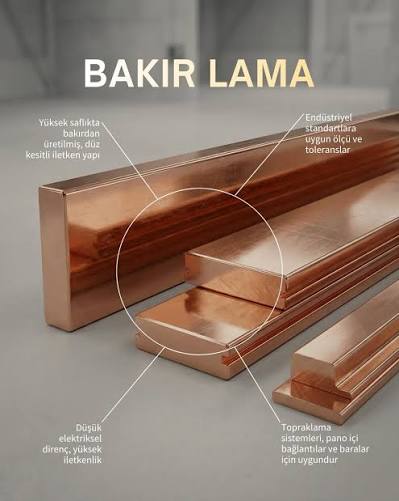
Processed copper busbar production is a critical process for the energy sector, which requires high electrical and thermal conductivity. Achieving high-quality production that complies with standards depends on key technical nuances.
The first and most vital factor is raw material purity. Cathode copper with a minimum purity of 99.9% must be used. Keeping the oxygen levels under strict control during melting prevents material brittleness and enhances flexibility.
The second critical stage is extrusion and precision rolling. Temperature and pressure must be perfectly balanced to form the copper into a homogeneous structure. Stability during this phase ensures that the electrical resistance of the busbars remains at a minimum.
Thirdly, tolerance control and surface quality come to the fore. Using smart mold systems and continuous measurement technologies, thickness and width precision must be achieved at the micron level. A surface completely free of cracks, burrs, or oxide layers is vital for easy installation in electrical panels and efficient current transfer.
Finally, heat treatment (annealing) processes must be managed accurately to balance mechanical strength and flexibility. Correctly applied annealing allows the copper busbar to bend easily without cracking.